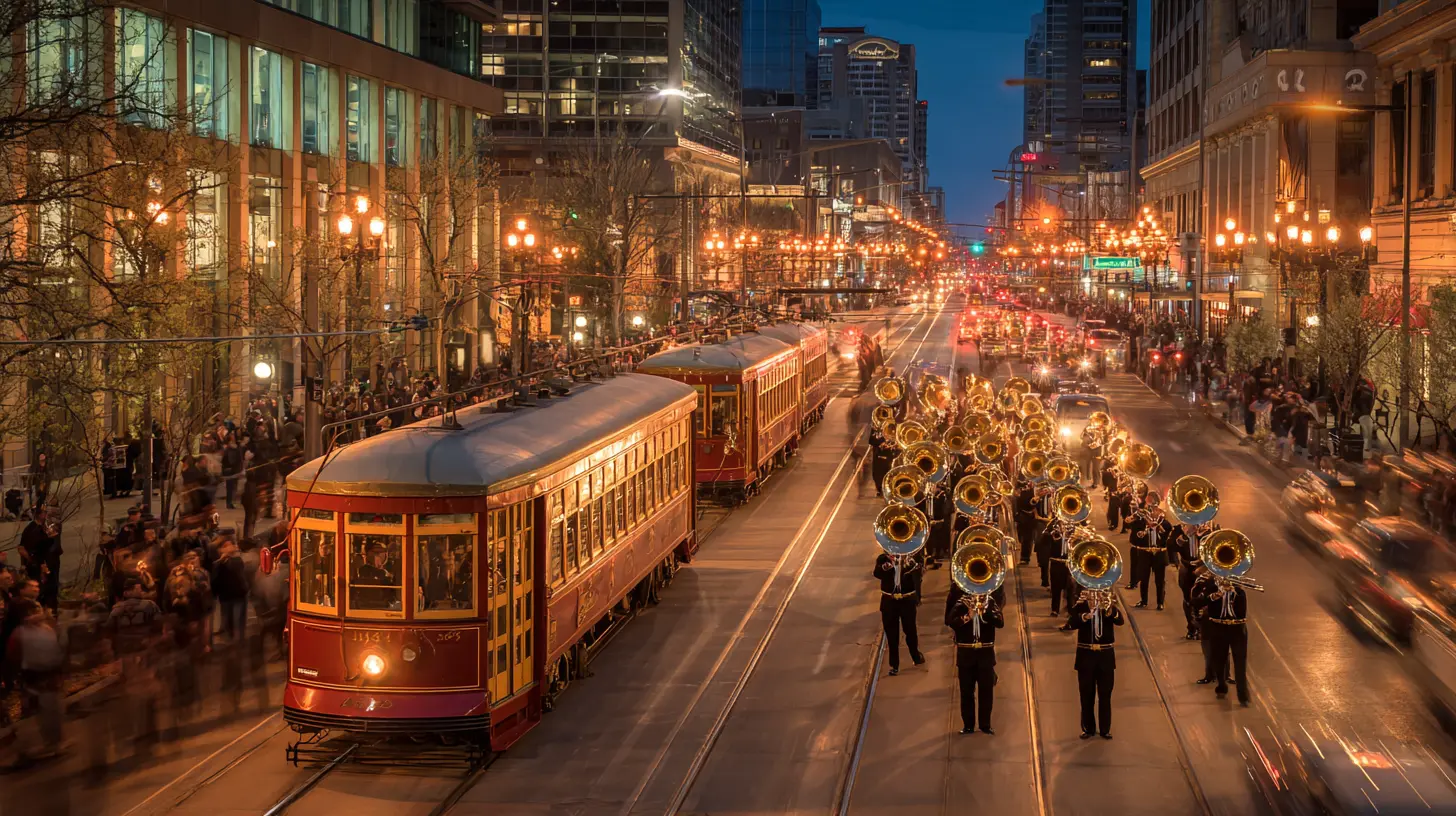
There is a precise choreography to the Rush Hour Brass Parade. At 5:33 p.m., when eastbound streetcar 12A brakes before the Depot Triangle, the conductor opens both doors, gives a quick thumbs-up, and a flood of musicians pour into the gap between coupled cars. They have 120 seconds to deliver a horn break that rattles the sandstone façades, pass the hat, and hop out before the light turns green.
The idea came from transit operator Lionel Haverly, who wanted to humanize the crawl into downtown without adding delays. He invited his niece’s marching band to test the theory: could music fit inside the existing dwell time at each signal? Riders lost their minds. Within weeks, union conductors wrote a memorandum of understanding that reserves two evening slots for live performance, complete with safety marshals and decibel caps.
Now thirty brass musicians, flag bearers, and roller-skating stewards rotate through a five-stop circuit. Their repertoire careens from second-line standards to string arrangements rewritten for sousaphone. Each time the fare box fills, the funds go directly to a youth music fund that keeps instruments in neighborhood schools. The city’s arts council matched donations, transforming tips into a six-figure fellowship.
The parade reshaped how people treat the commute. Office workers time their exit so they can board the “music run.” Parents bring toddlers to the median to dance. Local coffee shops created “conductor happy hour” menus to keep performers caffeinated. Even the transit authority benefits: social media clips of impromptu dance parties convinced lapsed riders to buy monthly passes again.
Critically, the parade also rewrites the city’s sonic identity. Instead of honking horns and brake squeals, downtown echoes with layered brass and call-and-response choruses. It’s civic theater hidden in plain sight—proof that even bureaucratic schedules have room for improvisation if everyone agrees to treat infrastructure like a stage.