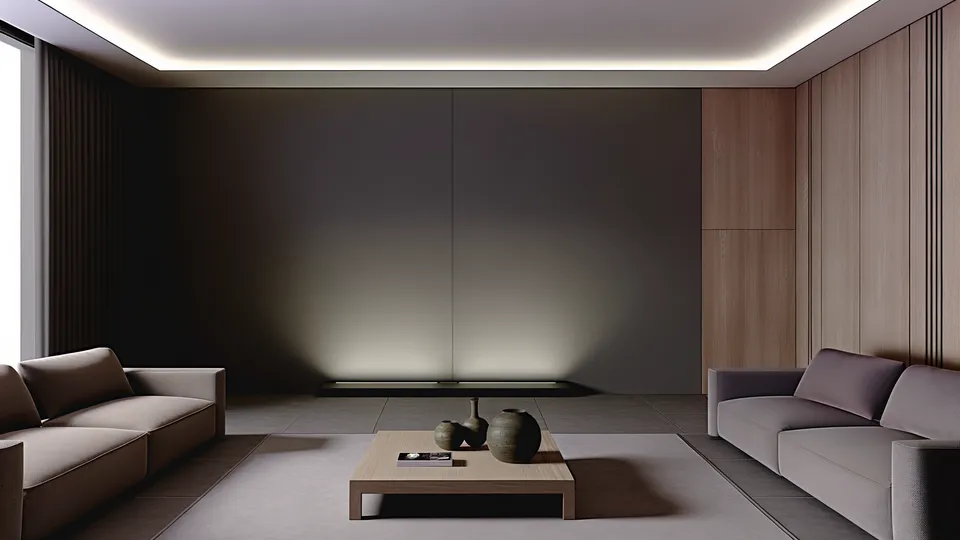
The apartment is striking in its restraint. White walls, natural wood floors, a single sculptural chair. Sunlight pours through bare windows, creating geometric patterns on the floor. There are no tchotchkes, no clutter, no visual noise. Just space, light, and a few carefully chosen objects.
"People think minimalism is about deprivation," says interior designer Maya Chen, gesturing around the room. "It's actually about abundance—abundance of space, light, clarity, peace. You can't have those things when everything is crowded with stuff you don't need."
Chen has built a career helping clients strip away excess, revealing the essential. Her approach isn't about following rules or achieving a particular aesthetic. It's about asking a simple question about everything you own: Does this add value to my life?
Minimalism has become fashionable, particularly on social media where influencers showcase pristine white rooms and capsule wardrobes. But the philosophy runs deeper than Instagram aesthetics.
"The visual result—clean spaces, few possessions—that's just the surface," explains Dr. Marcus Williams, a psychologist who studies consumer behavior and well-being. "The core of minimalism is intentionality. It's choosing what matters and letting go of what doesn't."
Research supports this. Studies show that cluttered environments increase cortisol levels and reduce focus. Conversely, simplified spaces correlate with lower stress and improved mental clarity. The impact extends beyond aesthetics into genuine psychological benefit.
James Rodriguez took minimalism to an extreme. Fed up with feeling overwhelmed by possessions, he challenged himself to own only one hundred items—total. Clothes, books, kitchen equipment, furniture, everything.
"It sounded impossible at first," he recalls. "But once I started identifying what I actually used versus what I just owned, it became clear. I was holding onto so much that served no purpose except taking up space and mental energy."
Two years later, Rodriguez maintains his hundred-item limit. His apartment is spare but not spartan. Each object he owns is both functional and meaningful. He wears the same seven outfits in rotation. His kitchen has one pot, one pan, one knife, one cutting board.
"I spend zero time deciding what to wear, organizing closets, or maintaining stuff," he says. "That freed up mental space for creative work, relationships, experiences. I actually have more of what matters because I eliminated everything that didn't."
The principles extend beyond physical possessions. Cal Newport, author of "Digital Minimalism," argues that our attention has become as cluttered as our homes, fragmented across apps, notifications, and endless content streams.
"We check our phones fifty times a day not because we want to, but because we've designed environments that demand it," Newport explains. "Digital minimalism means being as intentional about your digital life as minimalists are about their physical spaces."
This might mean deleting social media apps, turning off all notifications, or designating phone-free hours. The goal isn't Luddism but clarity—using technology purposefully rather than defaulting to constant distraction.
Sarah Patel implemented strict digital boundaries after recognizing her phone addiction. She now keeps her smartphone in a drawer during evenings and weekends, using only a basic phone for calls. Email is checked twice daily. Social media is accessed only on her laptop, during designated times.
"The first week was hard," she admits. "I kept reaching for my phone reflexively. But after that adjustment period, I felt like I'd reclaimed my attention. I could focus on conversations, read books without distraction, actually be present."
Psychologist Barry Schwartz identified what he calls "the paradox of choice"—the observation that having too many options often makes us less happy, not more. Every choice requires mental energy. Too many choices lead to decision fatigue and anxiety.
Minimalism addresses this directly. By reducing options, you reduce decision load. Steve Jobs famously wore the same black turtleneck daily, as does Mark Zuckerberg with his gray t-shirts. These aren't eccentricities but pragmatic solutions to decision fatigue.
The same principle applies beyond clothing. Having three plates instead of twenty means you never wonder which to use. Owning one coffee maker instead of an espresso machine, French press, and drip brewer means you make coffee without contemplating options.
"Every decision you don't have to make is energy saved for decisions that matter," says productivity consultant Emma Thompson. "Minimalism isn't just about less stuff. It's about less cognitive load."
The philosophy extends to social connections. While minimalism applied to friendships can sound cold, it's actually about depth over breadth—fewer relationships, deeper connections.
"I used to try maintaining friendships with dozens of people," says Anthony Green. "Birthday cards, occasional coffee, keeping up appearances. It felt obligatory and exhausting. Now I focus on six close friendships that actually matter. Those relationships are infinitely richer."
This isn't about being anti-social but about being intentional. Rather than spreading yourself thin across many superficial connections, minimalism suggests investing deeply in a few meaningful ones.
There's an economic dimension too. Americans spend roughly $1.2 trillion annually on non-essential goods, according to research from the University of Pennsylvania. Much of this goes to items that provide temporary pleasure before becoming clutter.
Minimalism offers a different approach: buy less, buy better, buy intentionally. One high-quality coat that lasts ten years instead of five cheap ones that last two years each. Fewer clothes but higher quality. Fewer possessions but greater satisfaction with what you own.
"I spend less money now but feel wealthier," says Rodriguez. "Because wealth isn't about having lots of stuff. It's about having what you need and nothing you don't."
Environmental benefits follow naturally. Manufacturing, shipping, and disposing of goods creates massive environmental impact. Buying less reduces that footprint directly.
Fast fashion, in particular, represents environmental catastrophe—textile production generates more carbon emissions than international flights and maritime shipping combined. A minimalist wardrobe of durable, quality pieces sidesteps this entirely.
"The most sustainable product is the one you don't buy," notes environmental researcher Dr. Lisa Park. "Minimalism isn't about green-washing consumption. It's about fundamentally consuming less."
For those interested in exploring minimalism, Chen suggests starting small. Pick one drawer, one shelf, one closet. Remove everything. Hold each item and ask: Do I use this? Do I love this? Does this add value? If the answer is no, let it go.
"Don't aim for perfection," she advises. "Aim for progress. Aim for being more intentional about what you keep and why. The rest follows naturally."
The process is ongoing. Minimalism isn't a destination but a practice—continually evaluating what adds value and what doesn't, choosing deliberately rather than defaulting to acquisition and accumulation.
What unites minimalist practitioners across different approaches is a sense of freedom. Freedom from maintenance, from decision fatigue, from the constant pressure to acquire more. Freedom to focus on what actually matters—creative work, relationships, experiences, growth.
"People think minimalism is restrictive," Maya Chen says. "But I've never felt more free. Free from stuff I don't need, free from obligations I don't want, free to focus on things that genuinely matter. That's not restriction. That's liberation."
As she speaks, afternoon light shifts across the room's bare walls, creating new patterns, new beauty from emptiness. Perhaps that's the essence of minimalism—not emptiness as lack, but emptiness as potential, as space for what truly matters to emerge.