On a Tuesday morning at the Brandon Regional Health Centre, the waiting room hum is familiar: the low murmur of conversations, the shuffle of clinic forms. But down a hallway, behind frosted glass, a modest room holds a different kind of exchange. An elderly man from a nearby town sits in a chair, a laptop balanced on his knees, his clinician visible on a screen. They talk about medication adjustments and a new set of blood-sugar readings uploaded from a device he clipped on that morning.
"I used to spend a day traveling and waiting for an appointment," he says. "Now, I can see my specialist and get answers from home." His voice is matter-of-fact, warmed by the relief of time reclaimed. That relief is the texture of in Westman: small frictions removed, routines reconfigured.
Across the region, this reconfiguration has an unmistakably local character. Broadband lines do more than deliver content; they connect classrooms, enable farmers to read soil sensors in real time, let an artisan potter in downtown Brandon ship work to a collector in Toronto. The shift has come not as a single dramatic moment but as a series of quiet decisions by people and institutions who were tired of making do.
The physical infrastructure matters. Over the past several years, a patchwork of municipal investments, co-operative Internet providers and provincial funding has pushed higher-capacity networks deeper into rural pockets. For communities that once measured distance in hours, a stable connection is the precondition for new practices. But the story is not merely about fiber or towers. It is about the work that follows: teaching a senior to video-chat, helping a farmer interpret a dashboard, rethinking clinic workflows so a telehealth visit is more than a Zoom call.
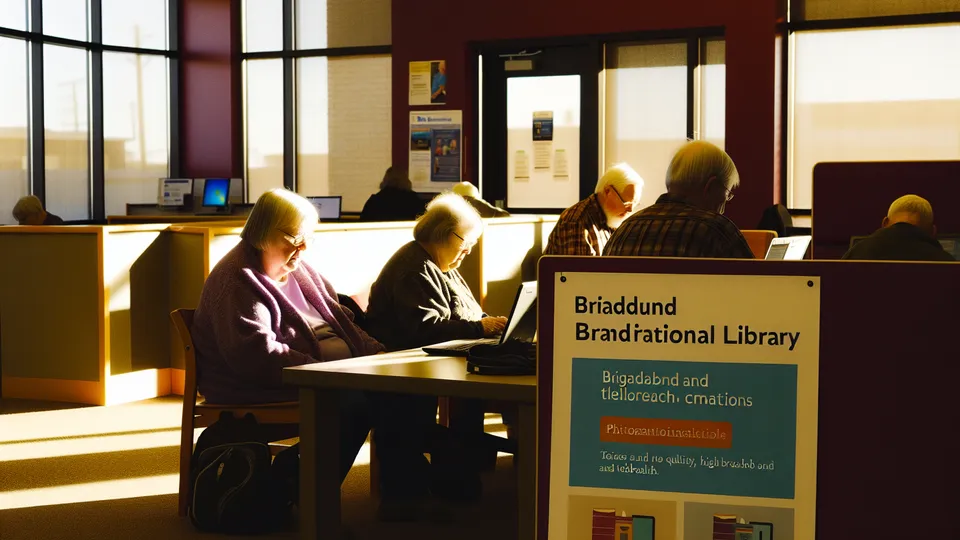
At the Brandon Public Library, digital-literacy classes run twice a week. "We start simple—email, video calls—then move to privacy, scams," explains a librarian who has taught dozens of seniors to navigate telehealth portals and online banking. Their sessions are as social as they are technical. "People come for help, and they stay for the company," she says. "Technology has been the excuse for a lot of reconnection."
In small towns west of Brandon, the library is often the on-ramp. In one community, volunteers repurposed an old storefront into a shared workspace where entrepreneurs test e-commerce, fiber technicians offer drop-in consultations, and high-school students run coding nights. These hybrid spaces reveal another pattern: adoption is rarely top-down. It spreads through networks of neighbors, teachers, nurses and shopkeepers who exchange practical know-how.
Agriculture—Westman’s backbone—illustrates the uneven, iterative nature of change. At a grain farm near Rivers, a patchwork of sensors reports moisture and nutrient status to an app the farmer checks with a coffee in hand. "It's not about replacing farmers," the operator says. "It’s about giving us the data to make better calls." Precision tools have reduced guesswork, but they also demand new relationships: with data companies, with agronomists, with local technicians who keep devices humming.
Telehealth has perhaps the most immediately tangible human impact. For chronic patients and new parents, a remote consultation can mean fewer canceled days of work and less strain on caregivers. Yet clinicians caution against treating telehealth as a panacea. "We can't reduce complex care to a checkbox," one clinician notes. Effective virtual care requires training, reliable bandwidth and a system attuned to when a patient needs in-person attention.
Economic opportunity follows the wires but does not arrive automatically. Small businesses that once relied on foot traffic have had to learn packaging, digital photography and social-media storytelling. Some do it brilliantly: a boutique that moved half its sales online reported new customers in Calgary and Winnipeg. Others struggle with the hidden costs—shipping, returns, and time away from the shop floor. Local chambers of commerce and development organizations are increasingly focused on offering practical supports: marketing clinics, shared fulfillment spaces and mentorship from peers who have scaled successfully.
Equity is the question that returns in every conversation. Seniors, low-income households and remote farms still face barriers: affordability, limited home wiring, and the soft skills needed to navigate online systems. Community solutions—subsidized access through libraries, volunteer-run tech clinics, shared workspaces—have been effective but require sustained funding and civic attention.
Looking ahead, the most promising developments are not flashy but structural: community-owned network models that keep decision-making local; partnerships between Brandon institutions and surrounding towns to share expertise; and curricula in local schools that prepare students for hybrid futures. The goal is not full digital saturation but a thoughtful integration that amplifies local strengths while hedging against new dependencies.
In the end, technology in Westman is less a dramatic arrival than a slow, social craft. It is being folded into the rituals of everyday life—clinic visits, harvests, shop counters, library tables—and remaking them in modest, consequential ways. What these towns are teaching larger conversations about rural life is that digital change succeeds when it is guided by the same impulses that sustain small communities: mutual aid, pragmatic problem-solving and a stubborn commitment to place. That balance—between new tools and old solidarities—will determine whether the region’s reinvention is simply technical, or genuinely transformative.