On a late-autumn morning in downtown Brandon, a bell rings as a shop owner swings open a weathered door. The storefront is less about commerce than continuity: a noticeboard with funeral announcements beside a poster advertising an evening lecture at Brandon University, a woman at the counter paying a hydro bill and buying a carton of milk. That overlap of private enterprise and public life is the province of rural in Westman — where businesses rarely sit apart from the towns they serve.
The history of entrepreneurship here is practical and patchwork. At the turn of the 20th century, grain elevators, blacksmith shops, and general stores defined settlements across southwestern Manitoba. These businesses were not merely nodes in an economy; they were civic infrastructure. The elevator operator doubled as weather-watcher and information broker. The storekeeper stocked bolts of cloth and gossip in equal measure. As transportation and agriculture modernized, many of those institutions consolidated or vanished, and with them went some of the incidental social glue that had held communities together.
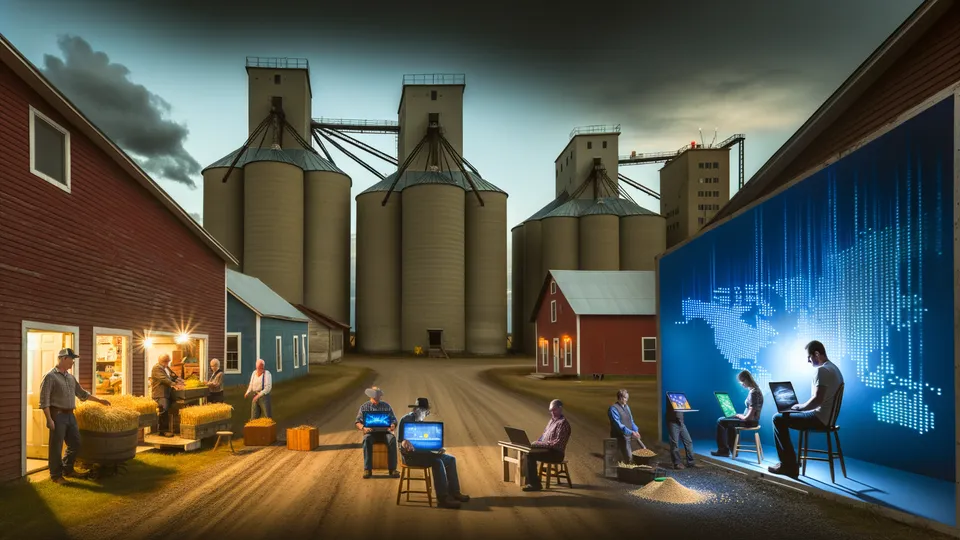
Yet from that attrition rose adaptability. In Virden and Rivers, mechanics who once repaired horse-drawn implements learned diesel diagnostics. A hardware store that supplied farmers with nails and fertilizer in the 1960s became, by the 1990s, a supplier of sensors, parts, and advice for precision agriculture. That shift — incremental, stubborn, and often family-led — is at the heart of how Westman towns have remained viable.
The human dimension is essential. Take a third-generation proprietor in a town an hour from Brandon, who remembers sweeping the store at dawn with her father. Today she employs five locals, hosts a winter coat drive each December, and spends afternoons walking the aisles with schoolchildren from a nearby elementary class. 'We don't just sell tools; we help keep this town whole,' she says. Her inventory includes both legacy items and a surprising array of small electronic controls for modern planters. The store is practical, yes, but it also performs memory and belonging.
Not all change has been incremental. Over the last decade, Westman has seen an influx of entrepreneurs who combine rural rootedness with digital fluency. Agritech startups collaborate with family farms to pilot data-collection tools. A handful of former Brandon University students returned to launch a soil-testing cooperative that shares lab resources among five towns. Remote work has allowed graphic designers, consultants, and small digital agencies to re-anchor in quieter spaces. These ventures do not declaw the agricultural economy so much as augment it: they create pathways for young people to remain in place without abandoning modern careers.
-owned enterprises have also emerged as an answer to market gaps. Where major grocers shuttered small-town outlets, residents in some locales pooled capital to create co-operative markets. Where broadband lagged, municipal partnerships and local co-ops pushed fiber into hamlets, enabling both e-commerce and telemedicine. These projects are not glamourous, but they are consequential: a reliable internet connection and a year-round grocery are infrastructure in the same way as a rail siding or grain elevator.
There are trade-offs and tensions. Scale economies favor consolidation; regulatory regimes and capital scarcity constrain experimentation. Pregnant with risk are towns with aging populations that may struggle to sustain payrolls and services. But entrepreneurs in Westman respond less to abstract business plans than to immediate neighbors' needs. A café opens because the senior centre needs a place for daytime meals. A metal fabricator adds a wheelchair ramp service because someone in town needs one. Those choices shape municipal life.
Looking forward, the region's resilience will hinge on several interlocking moves. Investment in broadband and transportation must be matched by support systems for founders: access to small-scale capital, mentorship from regional institutions, and procurement policies that favour local suppliers. Partners such as post-secondary institutions and regional development agencies can help translate technical know-how to local contexts, while preserving the social functions that businesses serve.
There is a moral economy at work in Westman entrepreneurship: the idea that profit and public purpose coexist on a modest ledger. That mingling of aims is not sentimental; it is strategic. By treating businesses as civic actors — employers, conveners, problem-solvers — communities preserve services and sustain social bonds. The challenge for the next generation will be to scale that ethic without flattening it: to attract investment and talent while protecting the small, irregular places where commerce and neighbourliness still breathe in the same room.
When the shopkeeper in Brandon turns her light off for the night, she does so knowing the day will begin again with the same mix of expertise and improvisation. In Westman, entrepreneurship has always been an act of stewardship — an effort to make livelihoods compatible with a sense of belonging. That balance is what will keep these towns not only surviving, but capable of imagining new futures.