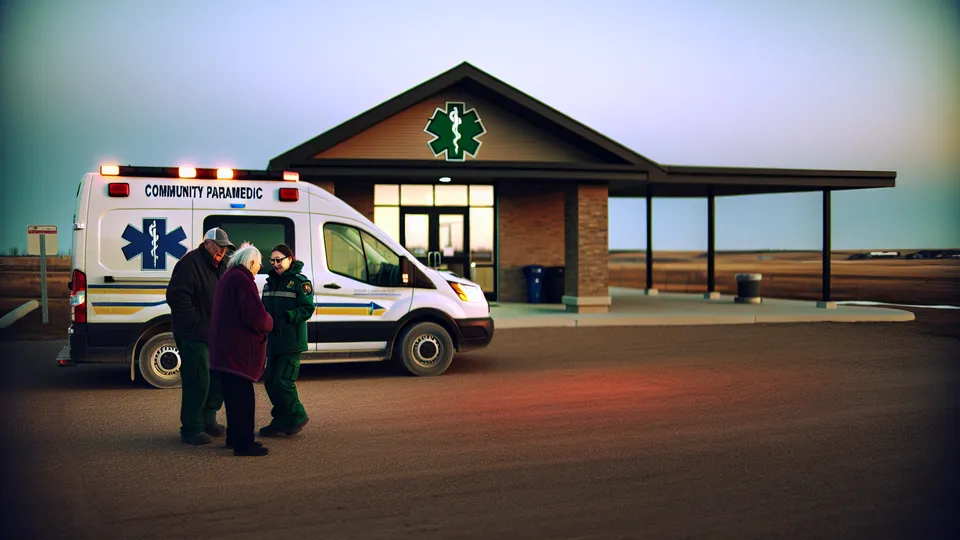
On a bone-white morning in late March, a van emblazoned with the words ' Paramedicine' eases into a quiet Brandon cul-de-sac. The paramedic, carrying a small cooler of medications and an armful of printed follow-up plans, walks to the front step of a bungalow where Helen, a 78-year-old widow with COPD, answers the door in slippers and a cardigan. She had called last week because a clinic appointment felt like climbing a mountain. Today, the care has come to her.
This small scene captures a larger rearrangement of health in Westman. Over the past five years, Brandon and surrounding communities have begun to retool how care is delivered: extending hospital services into neighbourhood living rooms, weaving telehealth into primary practice, and partnering with Indigenous leaders, home-care agencies and volunteer networks to meet gaps left by persistent provider shortages. Those changes are pragmatic and often improvised, but they prove that health systems can be patient-centred and place-based without sacrificing clinical rigor.
The backdrop is familiar to many rural Canadian towns: an aging population, clinic closures, and recruitment challenges. Brandon Regional Health Centre remains the region's hub, but increasingly the centre's role is less about acting as a single point of service and more about coordinating a patchwork of resources. Prairie Mountain Health, the regional authority, has supported several pilots that redistribute tasks across professions and technologies. Telemedicine appointments that once felt like a temporary pandemic fix have become routine, connecting patients in Rivers or Virden to specialists in Brandon or Winnipeg without a day lost to travel.
Yet alone does not explain the quieter revolution taking shape. Community paramedicine—the practice of training paramedics to provide non-emergency primary care visits, chronic disease monitoring, and fall-prevention assessments—has altered daily rhythms. Paramedics now conduct home visits that prevent unnecessary emergency-room returns and help patients navigate medication routines. 'We save the ambulance runs for the real emergencies,' says one clinician involved in the program. 'But just as important, we let people stay in their homes with dignity.'
Another strand is mental-health outreach. Local organizations have moved beyond referral cards to embed counsellors inside community hubs and high schools. Peer-support groups, many run by volunteers who have lived experience of addiction, grief or mental illness, work alongside clinicians to fill a continuum of care. For young people in Brandon, that has meant faster access to help during a crisis and more culturally sensitive services for Indigenous youth, whose experiences too often fell through traditional systems.
Partnership with Indigenous communities is both a moral imperative and a practical necessity. Westman encompasses treaty nations and Métis communities whose health priorities include language, land, and the role of elders. Recent initiatives have focused on co-design—scheduling clinics at the same time as cultural gatherings, allowing elders to influence care plans, and creating referral pathways that acknowledge traditional healing. These are not cosmetic add-ons. They change the way trust is built, which in turn changes outcomes.
Grassroots networks supply another crucial thread. Volunteer-run meal delivery programs, transportation co-ops and community health navigators are low-tech but high-impact. The local food network that once focused solely on food security now coordinates with public health nurses to identify clients with diabetes who would benefit from closer monitoring. A retired teacher who volunteers as a navigator describes how a simple home visit revealed a medication error that would otherwise have led to hospitalization.
Despite bright spots, the work is unfinished. Funding remains episodic, and many initiatives run on short-term grants or the goodwill of overstretched staff. Workforce retention is a daily conversation in physician lounges and boardrooms. Yet there is a growing consensus among clinicians and community leaders: sustainable change will come from devolving decision-making to the communities themselves, training local talent, and aligning finances to support preventative, home-based care.
Looking forward, stakeholders in Westman see a pathway that combines pragmatic policy with creative, community-rooted practice. That means stable funding for community paramedicine, integrated electronic records that respect privacy while reducing duplication, and training pipelines that encourage local students to pursue careers in nursing, social work and paramedicine. It also means embedding Indigenous governance in program design and measuring success by the quality of people's days, not only by bed-days saved.
Back in Brandon, Helen's visit concludes with a refill, a clear action plan and a promise: a paramedic will call next Tuesday to check on the inhaler routine. She watches the van pull away and, for the first time in months, says she feels less alone in managing her health. The new architecture of care in Westman is not a single grand reform but a hundred small commitments like that—quiet, practical, and human. Taken together, they suggest a different kind of resilience: one built not on institutions alone, but on relationships that make health a living part of community life.