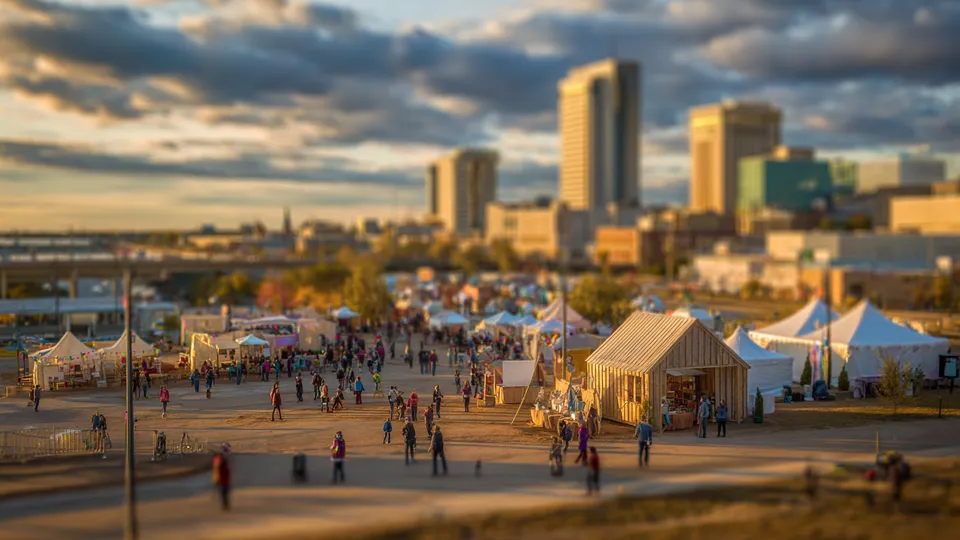
On a late September morning in Brandon, the city’s central plaza resembled a schoolyard from several futures at once. Children in bright rain boots clustered around a storytelling circle while older adults queued for a short, practical session on filing taxes online. A mobile “maker lab” hummed beside a tent where an elder taught Dakota phrases. That convergence — toddlers, teenagers, new Canadians, retirees and tradespeople — was not accidental. It was the point.
The Prairie Learning Exchange, a one-day cultural and educational fair now in its third year, intentionally dissolves the walls between formal classrooms and the rest of civic life. Organizers from Brandon University, Assiniboine Community College and the city’s public library built the program around a simple idea: education is most powerful when it is communal, tangible and rooted in local knowledge.
“Learning here has a social life,” said Elder Rose Sinclair during a midday workshop on plant medicine and language. Sinclair, who grew up on the lands now called Westman, used the small crowd’s attention to teach a few Dakota words and to explain how certain plants were used historically. “Young people don’t always get this in a textbook. They get it when someone hands them a story.”
That handoff — the intimate, person-to-person transfer of knowledge — is what residents say makes the Exchange more than a public-relations event. At a tent run by the Brandon Public Library, a seed library initiative offered packets of heirloom vegetables alongside lesson plans for classroom teachers. The program’s coordinator, Jocelyn MacDonald, described a recent partnership with three elementary schools: “Students grew the seeds, kept journals, then presented their findings to a council of elders and urban gardeners. The kids saw that science, history and food are the same conversation.”
Practical skills were as visible as cultural ones. Assiniboine Community College staged an apprenticeship fair just off the main square, where a table for electricians featured a young apprentice, David Chen, who had arrived in Brandon four years earlier. “I learned English in evenings at Manitoba Start,” he said. “This year I signed an apprenticeship contract because I met a contractor at the Exchange. It’s where need and talent cross paths.” Chen’s story reflects a deeper dynamic in Westman: changing labour markets press communities to reimagine adult learning as continual, not episodic.
That reimagining is visible in partnerships seeded at the Exchange. Brandon University faculty hosted micro-classes for teachers on trauma-informed pedagogy, using cases drawn from local classrooms. In the afternoon, a group of newcomer families attended a bilingual story hour led by a BU early-childhood education student in collaboration with a Ukrainian-Canadian cultural association. These practical collaborations — shared curriculum modules, co-designed outreach programs, on-the-ground mentorships — are intended to last beyond the festival.
But the Exchange is not without its tensions. Organizers confess that sustaining momentum requires funding that city budgets do not reliably provide. “The first year we had a volunteer’s energy; the second year we had momentum; this year we need endowments and small grants,” said Samir Patel, an instructor at Assiniboine who helped coordinate trades programming. The question Patel leaves hanging is structural: who pays to make civic education routine rather than episodic?
Another tension lies in representation. Indigenous leaders and newcomers both praised the visibility the event affords, but some cautioned against symbolic inclusion without institutional change. “A teaching moment in a tent is good,” said Elder Sinclair, “but what we really need is curriculum that recognizes our languages all year, and budgets that support Indigenous educators in schools.”
Despite these challenges, the Exchange’s real impact can be measured in quieter ways: an apprentice hired, a teacher implementing a new classroom routine, a six-year-old pronouncing a Dakota word for the first time. It is visible in follow-up meetings that have grown out of the fair — a neighborhood literacy hub now using space at the public library; a pilot dual-credit course between BU and a local high school in sustainable agriculture; and a municipal initiative to expand evening adult-education classes in trades.
What makes the Prairie Learning Exchange feel urgent is how it reframes education as civic infrastructure rather than simply a personal good. In places like Brandon — where demographic change, economic shifts and a renewed attention to Indigenous rights converge — the question is not only what people know, but how knowledge circulates across generations and backgrounds.
Looking forward, participants say the next phase must embed the Exchange’s spirit into year-round institutions. That means steady funding, policy commitments to language revitalization, and formalized pathways from informal learning at events into recognized credentials. It also means honoring the small, daily transfers of knowledge that sustain a place: a grandmother teaching a child to sew, a tradesperson showing a young worker how to read a blueprint, an elder teaching plant names in Dakota.
At dusk, as the tents came down and the last of the lanterns were folded, people lingered on benches, not from obligation but from habit. They had learned something practical and something deeper: that learning can be the public work of neighbors. In Brandon, for one afternoon at least, that work felt like a festival and the festival felt like a promise — one worth tending in ordinary time.