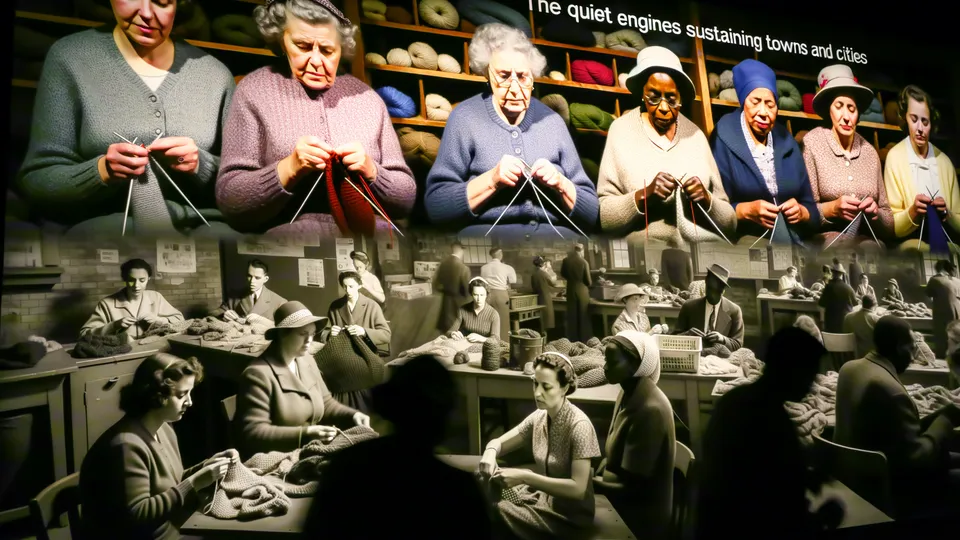
In the late afternoon at a modest warehouse near Brandon's railway tracks, a group of volunteers folds blankets, checks expiry dates on cans, and loads crates into a pickup bound for a rural hall. They move with a rhythm that feels rehearsed and intimate: an older woman taps a list with a pencil; a young newcomer translates item names into Punjabi for a volunteer who cannot; a retired teacher jokes to keep spirits up. It is a small scene, but it contains a history — one that helps explain how the Westman region has weathered economic shifts, natural disasters, and social change.
Volunteerism in Brandon and the wider Westman region is not an afterthought or a quaint civic hobby. For more than a century, unpaid service has been central to the region's social architecture. In the early settlement years, neighbours relied on barn-raisings, shared grain bins and cooperative harvest crews. During the world wars, women organized Red Cross workrooms and Victory Gardens; they sewed, knitted and drove fund-raising campaigns that kept towns afloat. Postwar prosperity saw service clubs, church groups, and hospital auxiliaries institutionalize this labour into organizations that supported education, health care and cultural life.
The Royal Manitoba Winter Fair, the Brandon Ag Society and volunteer-run rural fire departments are more than events and emergency responders — they are nodes of social connection. Long before formal social services expanded, volunteers staffed soup kitchens, built community halls, and taught newcomers English and Canadian customs. The Brandon Regional Health Centre, for example, has long depended on auxiliaries and patient-support volunteers to smooth the patient experience, supplementing formal nursing care with reassurance and practical help.
This history matters because it reveals how communities translate informal care into resilience. A flood response in 2011 and subsequent volunteer-led recovery efforts demonstrated the region's capacity to mobilize quickly: neighbours with four-wheelers, local contractors offering machinery, community kitchens providing meals and volunteers coordinating donations. Those responses were not only acts of compassion; they were exercises in civic learning, producing protocols, networks and trust that make future responses faster and more coherent.
But continuity has not meant stasis. The nature of volunteering in Westman has changed as demographics shift, economies evolve and alters expectations. Rural depopulation and an aging population mean fewer hands available for physically demanding tasks. At the same time, growing immigrant communities bring new skills, languages, and organizational forms that reshape volunteerism. Younger volunteers often seek shorter, skills-based commitments; older volunteers look for meaningful social connection rather than merely logistical duties. Digital platforms — from Facebook groups to volunteer-matching apps — have compressed time and geography, allowing people to coordinate donations or micro-volunteer remotely.
These changes create both opportunity and strain. Longtime volunteers report increasing complexity: regulatory requirements, insurance concerns and paperwork can make small acts of service feel bureaucratic. Nonprofits are stretched thin, juggling funding cycles while trying to train new volunteers whose availability is unpredictable. Yet has emerged. Intergenerational mentorship programs pair retirees with recent immigrants to teach civic history and share administrative know-how. Schools and post-secondary institutions in Brandon now integrate service-learning into curricula, giving students structured volunteer experiences that yield both community benefits and professional development.
To preserve the strengths of Westman's volunteer tradition, communities must treat unpaid service as infrastructure — something to be supported, adapted and invested in. Practical steps matter: streamlined training modules, childcare support during volunteering, modest stipends for high-skill roles, and centralized volunteer hubs that lower barriers to entry. Equally important is cultural recognition: framing volunteering as a public good, deserving of municipal coordination, stable funding and thoughtful evaluation rather than episodic applause.
As one seasoned volunteer put it at a community supper, 'This work keeps us human. But we need structures that keep it sustainable.' That observation points to a forward-looking ethic: build systems that respect volunteers' time, amplify diverse voices, and make civic participation accessible across generations and backgrounds.
Westman's future will depend on collective imagination as much as goodwill. If the region can translate its deep reservoirs of informal care into adaptable civic infrastructure, it will be better prepared for shocks and more equitable in daily life. The warehouse by the tracks is not merely a distribution site; it is a learning space, an apprenticeship for empathy and a rehearsal for governance. The quiet engines of unpaid labour have kept communities going. The task now is to lubricate those engines so they run longer, include more hands, and carry the region forward into a deliberately shared future.