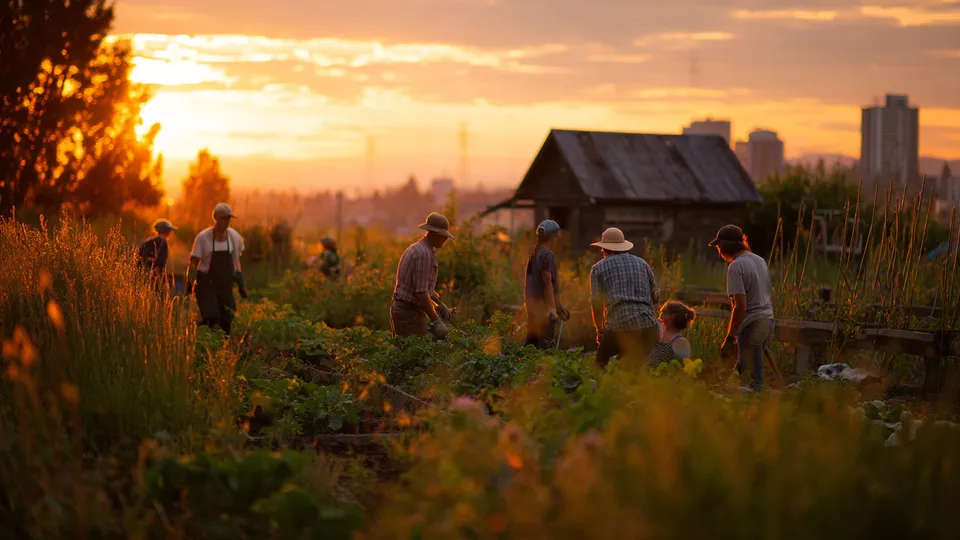
When the early light hits the raised beds at the community garden behind a modest church on Brandon’s east side, a small team is already at work: a retired school custodian pruning tomato plants, two university students checking irrigation lines, and a high-school volunteer teaching a toddler how to plant a seed. The scene has become emblematic of a broader shift across Westman — volunteerism no longer fits a single image of weekend fundraisers or long-time retirees. It is a patchwork of short bursts of service, skills-based projects, and cross-generational partnerships that are quietly but profoundly remaking the region’s social fabric.
On a colder afternoon in February, I met Earl Thompson (a name he prefers for the record), a 72-year-old volunteer who has worked with the local hospital auxiliary for nearly three decades. 'I used to do mornings at the gift shop,' he said, wiping his hands on his sweater. 'Now I’m mentoring younger volunteers on scheduling and budgeting. They bring new ideas; I bring institutional memory.' Earl’s work, like that of many long-serving volunteers in Brandon, is shifting from repetitive tasks to mentorship and advisory roles — a change organizations are welcoming and cautiously planning for.
The adjustments are not only generational. Nonprofit leaders across Westman describe a pivot toward 'micro-volunteering' and 'skills matching' — short, specific commitments where volunteers offer professional skills for defined projects. A Habitat-for-Humanity build last fall drew not just tradies but a graphic designer who volunteered one weekend to redesign the organization’s fundraising materials, and a youth social-media team that helped reach new donors. These contributions, while episodic, have amplified organizational capacity in ways that traditional volunteer models did not anticipate.
At the heart of these developments are local adaptations to practical constraints. Rural distances, limited public transit, and competing work schedules make regular weekly commitments harder for many residents. Digital platforms and social media have become essential connectors. A volunteer coordinator I spoke with described how an online sign-up tool transformed recruitment for food-distribution drives: 'We can fill shifts the same day now. People want to see immediate outcomes and manageable timeframes.' That immediacy has made volunteering more accessible to part-time workers, parents, and students.
Yet this evolution coexists with persistent pressures. Many organizations report volunteer fatigue and a shrinking pool for certain high-commitment roles, such as board members and long-term program leads. Funding constraints complicate recruitment: small nonprofits often lack staff capacity to train, supervise, and retain volunteers effectively. In Westman, where a handful of service providers shoulder much of the region’s social support, burnout is not only an individual hazard but an organizational risk.
There are, however, notable local responses. Brandon’s United Way, local hospitals, and several community foundations have initiated cross-sector training programs that pair retiring professionals with nonprofits in need of governance skills. Schools and post-secondary institutions are integrating service into curricula through community-based learning, ensuring young people gain real-world experience while addressing concrete local needs. Employers too are experimenting with corporate volunteer days tailored to rural realities: project-based contributions rather than one-off events.
The human impact of these shifts is tangible. A newcomer family, resettled through local refugee sponsorship, told me how matching them with an experienced volunteer shortened their time to employment and stabilized their access to services. A single mother who juggled shift work described the relief of an app that allowed her to commit two hours a month delivering meals — sufficient to make a meaningful contribution without upending her schedule.
Looking forward, the challenge for Westman will be sustaining these innovations while strengthening the underlying infrastructure that supports volunteerism. That means investing in volunteer coordinators, transportation solutions, and technological tools that reduce administrative friction. It also means rethinking recognition: celebrating not only lifetime achievement awards but also short-term, high-impact contributions.
There is no single formula for the future of volunteering in Brandon and Westman. But the emerging mosaic — elders mentoring youth, students lending digital savvy, professionals offering pro-bono expertise, and neighbors stepping in for precise, urgent needs — suggests a community adapting creatively to demographic and economic change. 'We’re being forced to be smarter about how we organize giving,' Earl observed, smiling. 'And in some ways, that’s exciting. It means more people can find their place.'
If Westman’s nonprofit sector can build on this momentum — by investing in people, , and collaborative structures — volunteerism will continue to be more than a safety net. It will be a living, evolving engine of civic life: pragmatic, inclusive, and resilient, sustaining communities through both quiet seasons and moments of crisis.