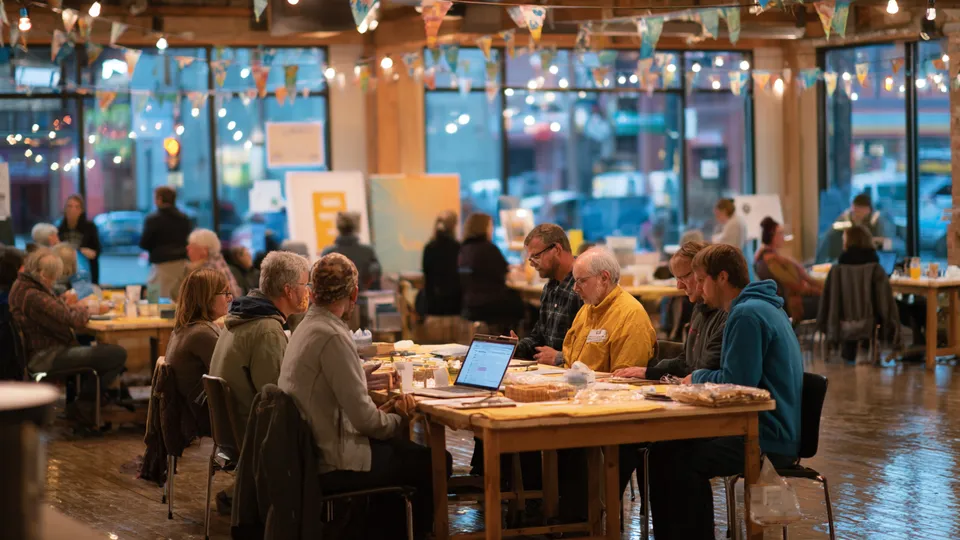
On a late-winter evening in Brandon, the hall filled with a particular kind of energy: low hums of conversation, the soft clatter of sample plates, the steady glow of laptop screens beside jars of preserves. It was not a conventional trade show. The event, organized as an experiment in cross-pollination, brought together farmers, makers, social entrepreneurs and -minded students from towns scattered across Westman. What they shared was not only products but a vocabulary for doing business in a landscape that has changed faster than many towns have been able to adjust.
The program opened with a short set of lightning talks. One speaker, a woman who has turned surplus prairie grains into a line of snack bars sold at farmers' markets and an online subscription, told the room how a phone call from a neighbour launched a new revenue stream. Another, a former equipment mechanic, described building a low-cost sensor that helps small producers track moisture in grain bins and avoid catastrophic spoilage. Both stories, modest in their contours, laid bare the economic logic of rural here: make things local value chains had left behind, iterate in public, and rely on neighbours to test ideas.
Personal stories threaded the evening. 'We are not trying to be Silicon Valley,' said Maya, a baker from Rivers whose social bakery employs newcomers and sells wholesale to two grocery co-ops in the region. 'We are trying to keep people in town.' Her hands, flour-dusted and steady, signalled the human aim underneath the jargon. Across the room Tom, a third-generation farmer from Virden, passed around a prototype of a dryer that allows him to process heritage pulses on the farm. 'If I can add five cents per pound by cleaning and bagging on site, I keep the margin here,' he explained. 'That keeps the kid who wants to stay here.'
These are not isolated anecdotes. They speak to structural shifts—declining farm numbers, shuttered storefronts, and an aging workforce—that rural entrepreneurs confront every day. Yet the that emerges in response is rarely the flashy startup myth. Instead it is incremental, place-rooted and often blended with civic purpose: bakeries that act as training hubs, woodshops that repair municipal infrastructure and sell export-quality furniture, farmers who become processors to capture value formerly flowing elsewhere.
Two themes kept returning in conversations: access and belonging. Access to capital remains a hurdle; traditional lenders are cautious about small-scale, place-dependent ventures. Locally governed lenders and loan funds are beginning to fill gaps, but people in the room wanted repayment terms that recognize seasonality. Access to markets continues to be solved creatively—through regional co-ops, pop-up markets in neighbouring towns, and digital direct-to-consumer platforms. Many entrepreneurs described relying on informal mentorship networks: retired shopkeepers, college instructors and neighbours who open their garages for a midnight packing session.
Belonging, meanwhile, is both product and strategy. Entrepreneurs who could anchor their work in local identity—Indigenous artisans reinterpretating traditional techniques for contemporary markets, food businesses celebrating local grains and game—found more durable support from neighbours and tourists alike. One Indigenous maker described how selling work at a rural arts fair led to a commission for a hotel lobby restoration, translating cultural expression into economic opportunity without erasing its provenance.
The forum itself aimed to foster that infrastructure. Workshops on shared-use processing facilities, a panel on public procurement and local sourcing, and a session on broadband-enabled marketing were concrete steps toward lowering barriers. There were also quieter, but no less important, moments: a conversation between a university student and the owner of a family-run hardware store about product-market fit; a municipality representative listening to requests for permitting flexibility so small processors can operate legally.
What pulse did these meetings reveal about Westman’s future? First, that entrepreneurship here is increasingly collaborative rather than solitary. Entrepreneurs borrow space, knowledge and distribution from one another; they speak of shared incubators, rotating retail pop-ups and municipal policies that favour local sourcing. Second, the region's advantages—lower overhead, proximity to raw materials, and a strong ethic of reciprocity—remain real assets if paired with better connectivity and access to patient capital.
The challenges are not small. Broadband remains patchy in outlying communities, regulatory frameworks are often written with urban businesses in mind, and the most ambitious value-added projects require scale and investment beyond a single town's capacity. But the gathering ended on a resolute note: what is missing can be built through networks rather than waiting for external saviours.
If there is a neat paradox to the evening, it is this: the very qualities that prompted decades of out-migration—the dispersal of services, the consolidation of agriculture—are shaping a new kind of rural entrepreneurship that leans on place as an asset. The entrepreneurs in Brandon are not trying to remake themselves into cities. They are inviting the region to imagine economies that hold people, skills and culture together. That imagination, when it is matched by thoughtful policy and communal patience, may be the most consequential innovation of all.
In the days after the forum, conversations continued in Facebook groups, over coffees in small diners and by shared spreadsheets tracking joint shipments. If rural entrepreneurship is a cultural event as much as an economic one, then the ripples from that warm-lit hall in Brandon are an encouraging sign: a region quietly remaking itself, project by project, handshake by handshake.