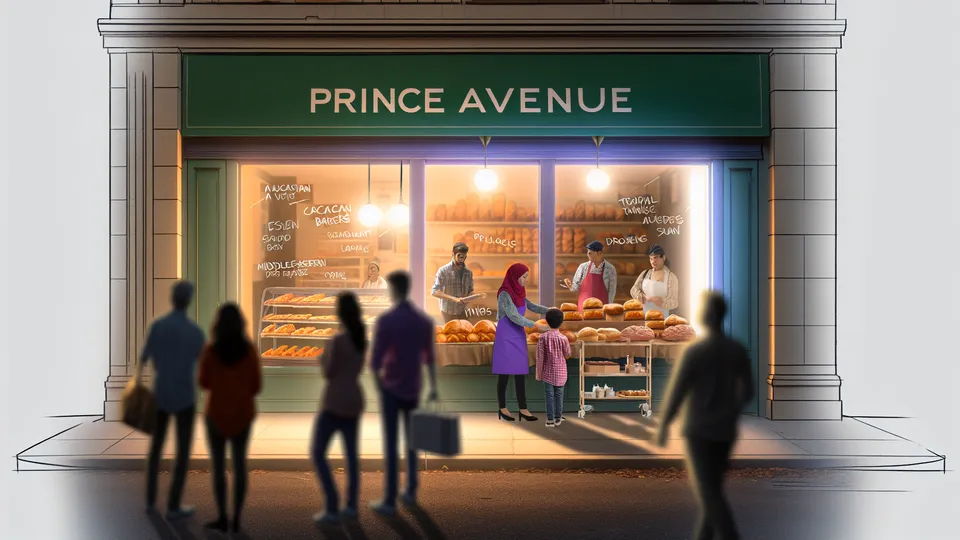
The storefront on Princess Avenue is small enough that if you blink you'll miss it—a narrow display window, a hand-painted sign, a shipment of jars and boxes stacked riskily by the door. Inside, trays of oat cookies cool on a counter while a pair of young men test a drone's camera gimbal. The scent of baking and diesel sits side by side; this is the peculiar, fertile air of small-town reinvention.
Two years ago, few people in Westman would have predicted that a refurbished downtown shop in Brandon would become the operational heart of an experiment. The initiative—known locally as Westman LaunchLab—is less a single program than a web of partnerships: Futures Westman offering counselling and microgrants, a faculty-led practicum from Brandon University providing student interns, and several municipal governments carving out subsidized space and procurement opportunities for local suppliers. The goal is pragmatic: stem the outward flow of young people and reimagine how modest enterprises can add value where commodity agriculture and retail strip malls once dominated.
"We wanted something that recognizes how people already live and work here," says Jill Becker, LaunchLab's director. "This isn't about turning every farm into a tech startup. It's about making entrepreneurship a viable, realistic option for bakers, mechanics, Indigenous makers, and service innovators—people with roots in this place and ideas that can scale slowly, sustainably."
The human scale of that mission shows in the stories. Sarah MacDonald, 29, grew up in Neepawa and returned after a stint in Winnipeg. With support from a $5,000 microgrant and weekly mentorship sessions, she transformed a hobby—gluten-free oat baking—into Prairie Oven Co., which now sells to three cafés in Brandon and supplies boxed mixes to a regional grocery co-op. "The microgrant bought new mixing equipment, but the mentorship changed my thinking about pricing and distribution," she says. "I stopped underestimating what people will pay for something made here, with care."
A different arc belongs to Marcus Little, whose family has farmed near Virden for generations. He taught himself photogrammetry and converted an old grain shed into a workshop offering drone mapping and crop-health services to neighboring farms. "The first year, I was just trying to break even on fuel and insurance," he says. "Now I hire a high school student every summer. It's kept dollars local that would otherwise go to firms in Brandon or Winnipeg."
LaunchLab's administrators tally success differently than a venture capitalist. In its first two years, the organizers say the program supported more than forty startups and helped create roughly eighty jobs—many part-time, many seasonal, but steady additions to household incomes and service offerings. Importantly, the initiative measures retention: several alumni who might otherwise have moved to the city chose to build families and careers in Westman.
The initiative's everyday politics are as instructive as its entrepreneurship playbook. Broadband access remains a stubborn barrier—businesses that rely on e-commerce or cloud services still struggle with upload speeds outside Brandon. Supply chains are another friction point: a ceramics studio in Souris can make beautiful handmade wares, but getting predictable wholesale contracts requires logistical expertise and a reputation network that entrepreneurs here often have to build from scratch.
Those gaps are where municipal cooperation has mattered most. Town councils have begun to prioritize local procurement for municipal events, public housing renovations and school catering, giving young vendors a predictable pathway to revenue. Community Futures' small-business counsellors, meanwhile, have focused not only on numbers but on paperwork—helping clients through licensing, grant applications and basic bookkeeping.
There is also a deliberate effort to make the initiative inclusive. LaunchLab hosts monthly convenings with Indigenous entrepreneurs and Elders to ensure cultural priorities shape programming. "Economic renewal has to honor relationships to land," says Elder Mary Sinclair, who has advised makers on branding that respects story and tradition. When Indigenous artisans sell blankets or beadwork through municipal markets, they do so on their own terms, not as token attractions.
Looking forward, organizers emphasize patient growth. "Rural entrepreneurship isn't a sprint," Becker says. "It's about building systems—finance, mentorship, markets—that let enterprises survive bad years and capitalize on good ones." Practical next steps include scaling a shared e-commerce platform, expanding after-hours coworking in smaller towns, and lobbying provincial funders for line items that support operating subsidies rather than one-time capital grants.
If the story of Westman LaunchLab is a lesson, it is twofold. The first is technical—the right mix of small grants, mentorship and market access can coax viable enterprises into being. The second is social: what looks like an economic program is at its heart a project of civic imagination, where neighbors become customers and towns become laboratories for new ways to make a living. For residents who stayed, returned, or simply decided to try, that combination is changing the landscape one storefront and one idea at a time.
Back on Princess Avenue, Sarah taps a recipe on her phone, Marcus wheels out a crate of camera rigs, and a teenager pins flyers for an upcoming makers' night. Outside, the Assiniboine River keeps moving, unconcerned by reinvention. Inside, for now, the math has worked: modest bets, resolute people, and a community willing to buy the first loaf.