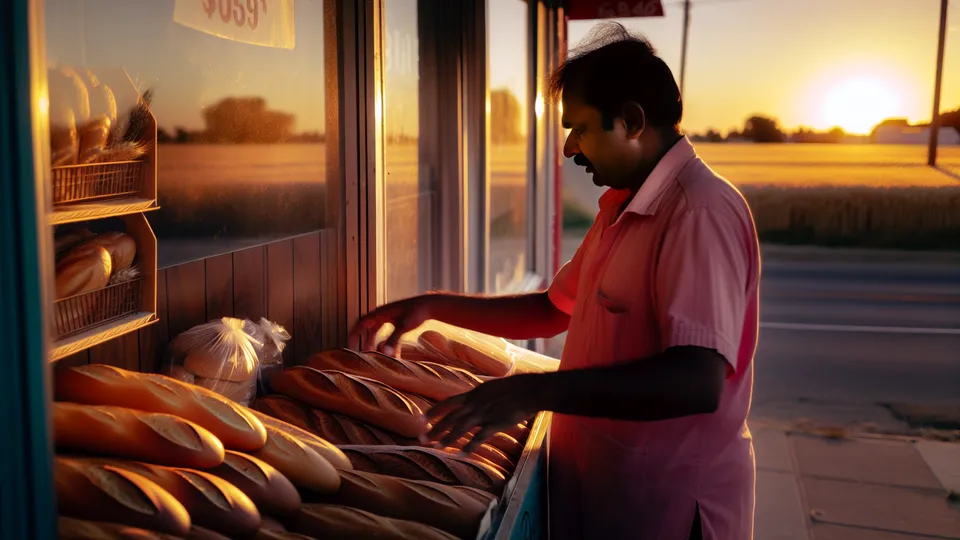
Downtown Brandon on an early October morning feels like a rehearsal for a new kind of prairie life. The main street hums not with commuters rushing to distant urban centres but with people lingering: a barista pours an oat latte for a farmer who has stopped in on his way to market; a teacher sips coffee while reviewing a business plan on a laptop; a teenager pins a poster for an open-mic night at the hall. The shopfronts — some freshly painted, some inherited from grandparents — are now the visible face of small ventures that stitch the region together.
The narratives of these businesses are pragmatic and intimate. In one converted storefront, a bakery and milling operation named Prairie Grain Collective began when Maya Patel returned to Brandon after culinary school in Winnipeg. She saw an opportunity in the countless hectares of Manitoba wheat and a longing locally for fresher, traceable food. Maya mills small batches of heritage grain, sources from nearby growers, and teaches weekend classes on sourdough and small-scale preservation. "People ask why I came back instead of staying in the city," she says. "What I tell them is that here you can build a relationship with every link in your supply chain, and that matters to both my customers and the farmers I work with." Her enterprise employs several local workers, and her weekend classes double as informal community gatherings where ideas are exchanged and new collaborations are born.
A few kilometres out of town, on the edges of Lake of the Prairies, brothers Liam and Noah Desjardins converted an old farm shop into a prototyping lab for agtech sensors. They are emblematic of a second wave of rural entrepreneurs who marry traditional commodity production with digital tools. Their sensors monitor soil moisture and crop health and are built from locally sourced materials wherever possible. "We grew up here; we know the rhythms of this land," Noah says. "But we also know how to code and solder. The combination changes the value proposition of a farm: it can be a place of production and invention."
These businesses do more than add jobs; they alter the social topology of towns. When a bakery hosts a storytelling night, it is not merely a marketing ploy. It becomes a civic space where newcomers and lifelong residents meet. When a prototype lab stretches its hours to host a high-school robotics club, it seeds the next generation of makers whose reasons to stay may now include opportunity as well as family ties.
The growth of these ventures is not accidental. It rides on the slow build of local supports that have matured over the last decade. Brandon University and Assiniboine Community College have incrementally expanded curricula and hands-on trades training, forming a web of talent development. Economic Development Brandon facilitates connections between small firms and regional buyers, while Community Futures and rural credit unions fill financing gaps that larger lenders often overlook. And federal and provincial investments in rural broadband have been quietly transformative: where a decade ago a video pitch might have been impossible, now a live-streamed workshop can reach buyers across the province and beyond.
Yet the work is uneven. Access to capital remains a persistent friction point. Dedicated manufacturing facilities and cold storage are costly to retrofit in towns that never planned for light industrial reuse. For Indigenous entrepreneurs and new immigrants, the pathways remain steeper, punctuated by questions of land access, cultural recognition, and multilingual networks. Seasonal rhythms of agricultural work also complicate staffing and scale.
Still, the human stories reveal why these challenges are being met. In Neepawa, a social enterprise called The Reuse Workshop salvages building materials from decommissioned barns and repurposes them into furniture and community art projects. Its co-founder, an Indigenous carpenter named Rose Crowfeather, describes the work as restorative: "We are keeping materials in circulation and telling the story of the land and its people in every beam. People come for the goods but stay for the conversation."
What makes entrepreneurship in Westman distinct is its embeddedness. These are not pop-up brands with headquarters elsewhere; they are businesses physically and emotionally invested in their towns. They adapt to winter logistics, school timetables, and local festivals. They sponsor the minor hockey team and provide meeting space for the community garden. Their returns are measured in months and seasons, not only in quarterly reports.
Looking forward, several trends suggest how this ecosystem might deepen. Distributed manufacturing technologies — small-scale milling, cold-chain micro-logistics, localized packaging — can capture more value locally. Partnerships between colleges and farms can create co-op learning environments where students earn while they innovate. Policy that targets infrastructure beyond the usual roads and rail — affordable broadband, shared processing facilities, and regulatory adjustments for small-batch food producers — will unlock latent potential.
But the most important ingredient is social capital: the trust that allows risk-taking to spread. When a retired carpenter offers his workshop to a young entrepreneur, or when a town council approves a mixed-use zoning change, those choices are investments in a collective future. The great and quiet achievement of Westman s entrepreneurs is that they are not just building businesses; they are reweaving the social fabric of place. In doing so, they are proposing a simple yet radical idea: that rural communities can be sites of invention, care, and continuity — and that prosperity, measured narrowly, is only one of the reasons people remain and return.
Back on Brandon s main street, as the afternoon sun slants low and the ovens cool, customers linger. The conversation moves from recipes to crop rotations to the next community initiative. It is in these conversations, more than in any balance sheet, that the possible future of Westman is being imagined and enacted.