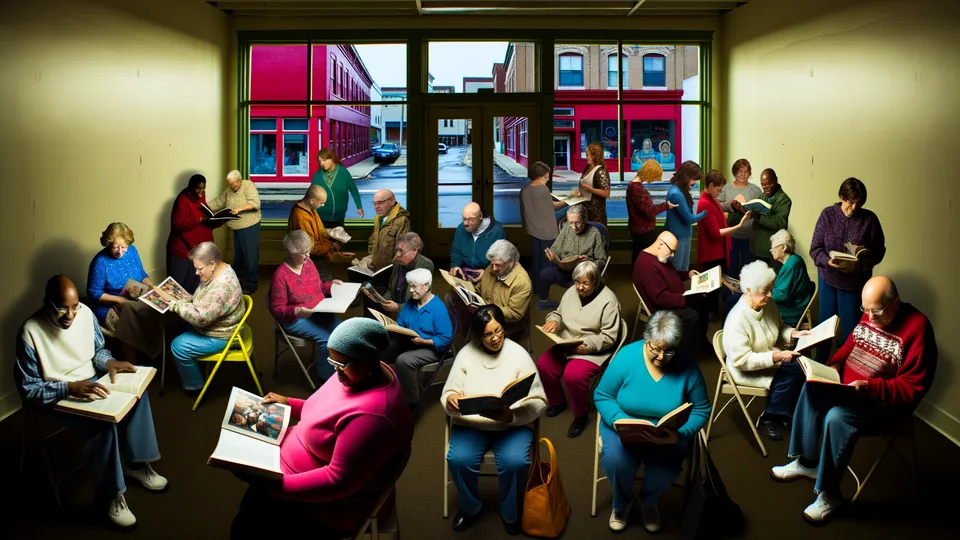
On a Tuesday evening in a narrow storefront off Rosser Avenue, the hum of a sewing machine competes with the scrape of a planer. A group of high-school students crowd over a salvaged toolbox while two elders at the far table stitch moccasin uppers and exchange stories about the river that used to carve the town’s eastern edge. People here arrive weary from shift work or school, or simply curious; they leave with a repaired coat, a new resume line, or a story to tell.
This is one of the modest classrooms of the Westman Learning Collaborative (WLC), a patchwork of initiatives that has, over the past four years, quietly remade what “education” looks like in Brandon and smaller surrounding communities. Its aim is practical and humble: to create learning opportunities that respond to the rhythms and needs of the region—trades, adult literacy, Indigenous language and land-based knowledge—while knitting together generations that often drift apart in formal schooling.
The idea began, improbably, in conversations between an English teacher, a public librarian and a retired carpenter who met at a potluck in 2019. "We were talking about kids who stopped showing up at school but who still wanted to learn how to fix things and make things," said Asha Patel, a former high-school teacher and now the WLC’s coordinator. "It felt absurd that the building with textbooks and the workshop where someone’s grandfather could teach pipe threading were miles apart. We wanted learning to happen where life happens."
WLC operates without a single brick-and-mortar campus. Instead, it assembles temporary classrooms—an evenings program in a library basement, a morning woodshop in a vacant storefront, pop-up storytelling circles in the municipal park—each run by volunteers, a handful of part-time instructors, and partnering institutions such as Brandon University and the public library. That elasticity is also its strength: it responds quickly to local employers’ needs, to gaps in adult education, and to cultural opportunities that formal curricula can miss.
Take the Repair Café and Trades Lab, one of the most popular offerings. On Saturdays, people bring in lawnmowers, snowblowers and broken chairs; while volunteers guide them through diagnostic thinking and hands-on repair, they also teach measurement, safety and shop math. Marcus, 17, had been drifting between classes before he spent a month in the lab learning basic engine work. Soon after, a local farm-equipment shop hired him for seasonal maintenance.
"The lab taught me I didn't have to be good at school to be useful," Marcus told me, tightening a belt around a small engine. "When I fixed that first mower, I got confidence that made it easier to try other things."
Another WLC strand—the Story Circles—pairs youth with Indigenous elders to exchange language, land-based knowledge and oral histories. These sessions have been among the most quietly transformative. "When an elder speaks of a place, it becomes alive in a different way," said Maureen Walker, who facilitates the circles. "Students begin to understand that their town isn’t just a grid of streets; it’s a landscape of relationships and responsibilities."
The collaborative’s learning model also values micro-credentials and employer partnerships. Brandon University offers short accredited modules—welding basics, workplace communications, eldercare competencies—that learners can stack toward formal certificates. Local employers, in turn, have started recognizing those certificates as meaningful evidence of skill. "We needed a way for people to show what they can do besides a diploma," said David Chen, owner of a Brandon fabrication shop. "The WLC gives us that proof, and it gives us workers who already understand the local context."
WLC’s impact is visceral rather than statistical: improved confidence, renewed civic participation, and a different sense of belonging. Still, the program faces structural constraints. It depends on inconsistent grant cycles, volunteer time that can evaporate with burnout, and the uncertain life of rented storefronts. "The hardest thing is ," Patel admitted. "We can light a match in a room and get people learning, but keeping the light on year after year is a different challenge."
Looking forward, the Collaborative is experimenting with a hybrid approach: formalizing partnerships with school divisions so students can earn credit for community-based projects, while advocating for municipal support to stabilize shared learning spaces. There is also growing interest from smaller towns in Westman to adapt the model, tailoring it to local economies—grain handling in Virden, conservation and park-guides training near Riding Mountain.
What makes the WLC worth watching is not its novelty but its insistence on a simple premise: learning rooted in place and mutuality can address both practical and civic deficits. It does not promise utopia; it promises repair—of tools, of language, and, quietly, of social ties frayed by economic shifts and institutional inertia.
When I left the storefront that evening, a teenager was showing an elder how to take a photograph on her phone. They laughed as the photo captured two generations framed by a workshop’s sawdust and the soft light of a lamp. It was, in miniature, the project’s larger work: assembling different strands of a community into a coherent practice of learning that belongs to everyone.
If the WLC can secure stable funding and deepen ties to formal institutions, its model may offer a way for other rural regions to rethink education not as a sequence of credentials but as an ongoing, place-based conversation about how to live and work together.
"We teach more than skills," Walker said quietly, folding a finished moccasin. "We teach people why they matter here. That changes what comes next."