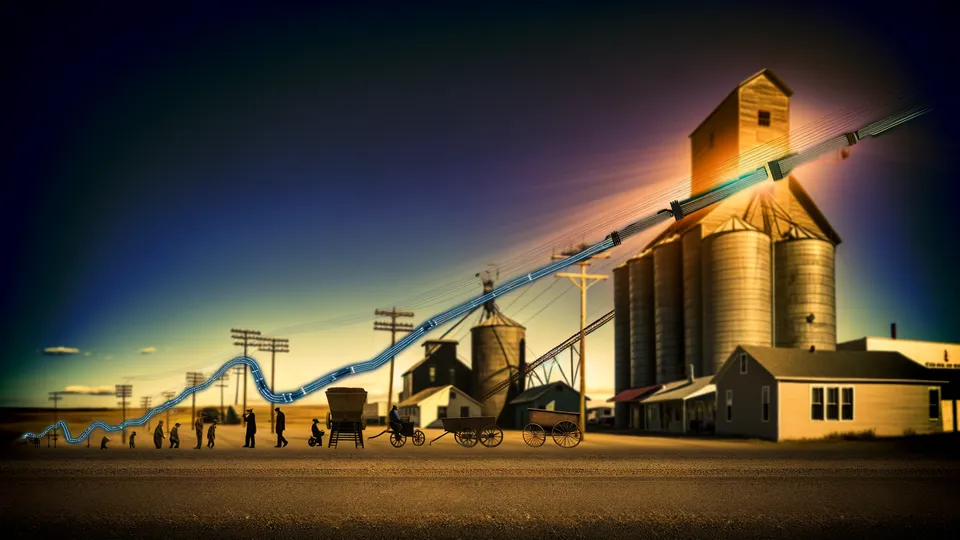
On a cool spring morning in Brandon, a farmer steps into a pickup cab, glances at a tablet on the dash and checks soil-mapping data before heading to a field that, a century earlier, would have been reached by horse. Nearby, a high school student attends a hybrid class at Assiniboine Community College while an elderly man schedules a telehealth appointment at the Brandon Regional Health Centre. These quiet, ordinary acts are the latest beats in a longer story: how has threaded through Westman life and remade what it means to belong to a small town.
Technology arrival here was never simply technical adoption. It was social negotiation, policy choices, and the slow rewriting of routines. Early twentieth-century telephones and local switchboards first stitched farms to town shops and family to distant kin. The rhythm was human: operators, party lines, neighbors trading calls as they swapped seeds.
Then came electrification. Manitoba Hydro and rural cooperatives brought light into kitchens and power to machinery. In the decades after World War II, electric motors and mechanized farm equipment accelerated production and altered labor patterns. The countryman who once wore many hats—miller, blacksmith, bookkeeper—found work else where as machinery centralized tasks.
Those shifts widened opportunity while eroding certain communal anchors. Grain elevators that once dotted the rail lines were not only storage but social hubs; as elevators consolidated or closed, so did informal meetingpoints where farmers compared weather, seed choices and politics. The railway and the elevator shaped a geography of conversation; their removal forced new places to emerge.
The late twentieth century introduced broadcast media and then the internet, at first as novelty and then as necessity. Brandon University and community colleges became nodes of digital literacy; professors and librarians taught not only literature but how to navigate a growing virtual public sphere. Public libraries in Neepawa, Virden and other towns turned into de facto internet access points long before universal broadband was realistic for every household.
Local entrepreneurs and a uniquely Westman civic culture made a difference. Westman Communications Group, born from regional demand, invested in cable and internet infrastructure that would make broadband an attainable service for many residents. That kind of locally rooted investment altered the pace at which small businesses opened web storefronts, farmers adopted precision agriculture tools, and families accessed streaming education and telehealth.
The human side of those shifts is not visible in megabytes. It shows up in the memory of a schoolteacher who remembers taking roll in the one-room schoolhouse and later, decades on, proctoring an online exam for students scattered across Prairie towns. It shows in the librarian who helped a senior fill out a job application online, then celebrated when that person got hired. It shows in the clinic nurse who set up a tablet so a patient in Killarney could consult a Brandon specialist without an all-day trip.
Telemedicine offers perhaps the most direct case of technology reshaping small-town life without erasing its texture. For residents with limited mobility or during winter storms that make travel risky, a virtual consult can mean timely care and fewer missed hours. But it also raises questions about the kinds of care that are lost when in-person examination is replaced by pixels: the small talk that surfaces a depression, the touch that signals pain. Technology enlarges access and compresses certain human cues; communities must learn to hold both gains and losses in view.
Agriculture, too, demonstrates a mixed ledger. GPS-guided tractors, soil sensors and market analytics have bolstered yields and reduced inputs. Yet the capital intensity of precision tools favors larger operations, accelerating consolidation in a field already shaped by commodity markets and policy choices. The story of technology is inseparable from decisions at municipal councils, co-ops, and provincial boards about subsidies, training and equitable access.
Looking forward from Brandon, the question is not whether technology will arrive; it already has. The more urgent work is civic and cultural: ensuring broadband as basic infrastructure, investing in local skills training, safeguarding the informal meetingplaces that bind residents, and designing healthcare and education systems that use technology to deepen rather than erode relationships.
This is a modest prescription. Small towns do not need to mimic urban models; they need to adapt technology in ways that respect their social architecture. That means funding library networks, supporting community-run connectivity, offering telehealth that complements local clinics, and creating spaces—digital and physical—where the bargains of modern life can be discussed.
In Westman, technology has always been negotiated at kitchen tables and council chambers as much as in boardrooms. The future will be decided the same way: not by gadgets alone, but by neighbors willing to describe what they want to keep, what they can let go, and how to share the gains. In that ongoing conversation, the tablet on the pickup dash and the telehealth appointment are less endpoints than invitations to reimagine small-town flourishing for a new century.