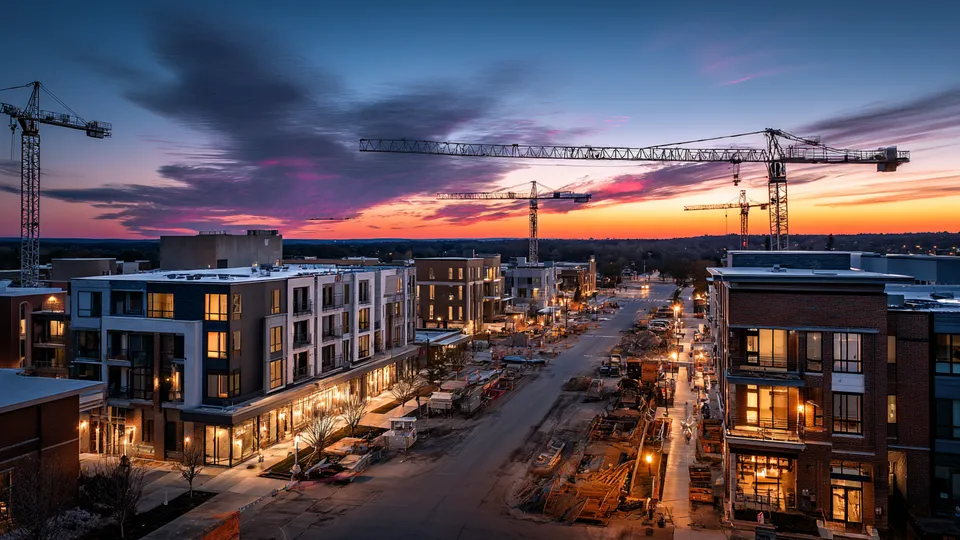
On a chill morning at the edge of Brandon, a line of new townhouses catches the sun while a toddler chases a small dog across a gravel boulevard. Hannah, 34, moved here two years ago with her two children after finding steady work in logistics; she jokes about how her commute — once an hour into Winnipeg — is now measured in moments. But she also points to the pile of paperwork on her kitchen table and the rent increase in her landlord’s latest notice.
"You feel like someone's finally paying attention to our town," she says. "But it feels like the rules are changing while we're still figuring out how to be in them."
Hannah’s ambivalence captures the contradiction animating the Westman region today: a burst of development and opportunity, and an equally palpable anxiety about who benefits. Outside Brandon, farm fields give way to gravel roads and construction trailers; municipal halls are busy at night with neighbours debating subdivision plans; local colleges are pivoting training toward trades and health care to meet new employer demand. The story is not unique to Westman, but its shape is distinctly prairie — wide, uneven, and threaded with tightly knit communities that hold deep memory and expectations for what growth ought to look like.
The immediate driver is simple: people and capital are moving. Employers say labour shortages that stymied growth for years have eased with a steady inflow of newcomers, seasonal workers, and returning youth choosing to stay. Developers point to rising demand for rentals and modest family homes rather than the luxury suburbs of larger centres. "We're trying to build housing that fits what people here actually need," a regional developer told me, asking not to be named. "That isn't always the headline-friendly, high-margin product you'd see elsewhere."
But supply is only part of the picture. Infrastructure — water, sewage, transit, childcare, and health services — is stretched in ways that quietly determine who can remain. Nurses and social workers I spoke with describe a pattern of doubling-up: families in temporary accommodations, seniors losing access to nearby services as units convert to short-term rentals, and young workers commuting longer hours because affordable units are on the opposite edge of town. "You cannot grow without the supports that let people work and be healthy," a nurse at a regional health centre said. "Construction brings jobs, but it also brings patients who need more services."
Downtown Brandon tells another story. Once-dim storefronts now shimmer with cafés, small galleries, and a new bakery run by a young entrepreneur from Neepawa. There is genuine vibrancy — but also vacancies in older retail blocks, where rising rents and changing consumer habits collide. Older shopkeepers, whose families have run businesses for generations, feel squeezed. "My father started this store when the grain elevator still ran full-time," one owner said, tracing a thumb along a weathered counter. "Now we do our best with online orders and events. But it's harder to keep the lights on."
Rural communities around Westman wrestle with parallel pressures. Farmers who once saw their land as family legacy now find offers from developers that will fund retirement and relocation. For some, that sale represents security; for others, it is a disorienting severance from place and purpose. New housing tracts can be a lifeline for municipal tax bases, but they also rewire local rhythms, from school enrollments to volunteer corps.
Amid the tensions, promising forms of civic creativity are emerging. Partnerships between post-secondary institutions and local employers are producing targeted training programs for agri-tech, health, and trades. Municipalities are experimenting with inclusionary zoning, creative use of municipal lands for affordable housing, and public consultations that ask residents to shape how growth unfolds. "There's a recognition that a market alone won't craft the kind of community people want," a planner said. "So we're negotiating."
The human consequences of those negotiations are immediate and intimate. For the young nurse who moved back to her hometown to care for her aging grandmother, flexible schedules and affordable childcare make the difference between staying and leaving. For a retired farmer, the sale of a parcel of land funded grandkids’ education and a small business start-up in town. For a teenager in Brandon, new post-secondary programming opened a path to a trade apprenticeship she hadn’t imagined.
If Westman’s future is to be equitable, it will require coordinated choices: investment in childcare and mental-health services, smarter use of municipal lands, transportation linkages that shorten commutes, and an affordable housing toolkit that preserves options for seniors and young families alike. It will also demand that development be judged not only by units or tax revenue but by the quality of daily life it produces: neighbors who can afford groceries, children who can attend local schools, and elders who can access care without long journeys.
There is no single blueprint for remaking a region. But there is a clear throughline in Westman: growth that is attentive to existing communities, coupled with a willingness to experiment and to share the risks and rewards of development, yields more durable benefits. As Hannah watches her son pedal a bike along a newly paved sidewalk, she says she wants that sidewalk to lead somewhere — to a job, to a school, to a clinic. The work of building tomorrow, she adds, is about making sure everyone can reach those destinations.
In the months and years ahead, the choices made in council chambers, college classrooms, and kitchen tables will determine whether Westman's expansion becomes a story of widened opportunity or of frayed communities. The region's beauty lies in its people: their resilience, pragmatism, and surprising capacity for collective imagination. If those qualities guide development, Westman could yet become a place where growth strengthens the social fabric rather than stretching it thin.