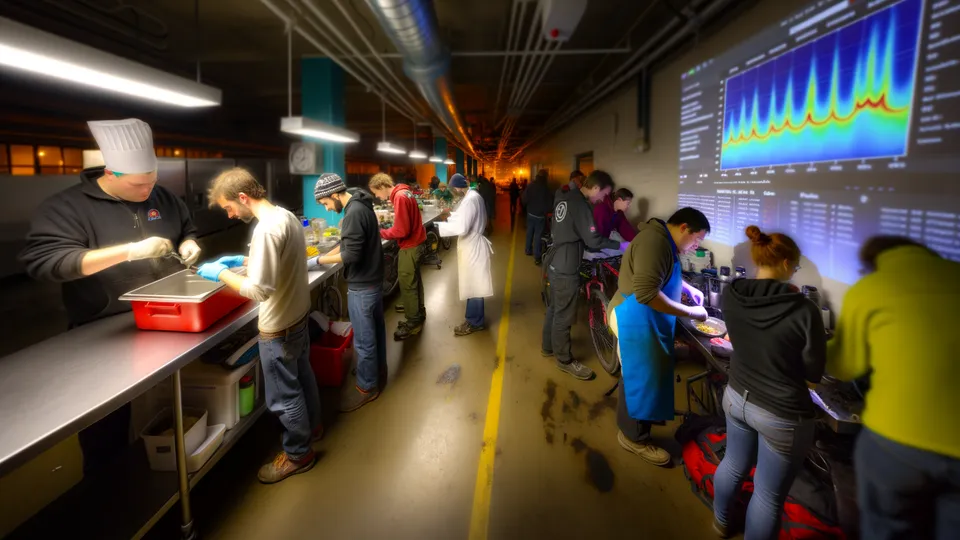
Delivery rider Nikhil Rao jokes that the Bike Kitchen Night Shift is “half pit crew, half soup kitchen, all therapy.” The program commandeers a culinary school after-hours: mechanics set up triage tables on the loading dock while culinary students prep caldo verde and tamarind punch inside. Riders roll in with busted derailleurs and leave an hour later with tuned drivetrains, full stomachs, and reflective decals for free.
The night crew also crowdsources safety intel. A wall-size map glows with fiber-optic pins showing crashes, potholes, and police encounters. Every Thursday, volunteer data scientists export the map and send anonymized heat layers to the transportation department, which has already retimed four signals and filled eleven chronic potholes because of the intel.
Funding comes from a mix of neighborhood improvement districts and micro-sponsorships from independent cafés that rely on the courier network. In return, the Bike Kitchen stamps repair cards that double as discounts the next morning. It’s an economy of care disguised as maintenance—a reminder that the city’s after-hours workforce deserves the same calibrated support usually reserved for pro race teams.